
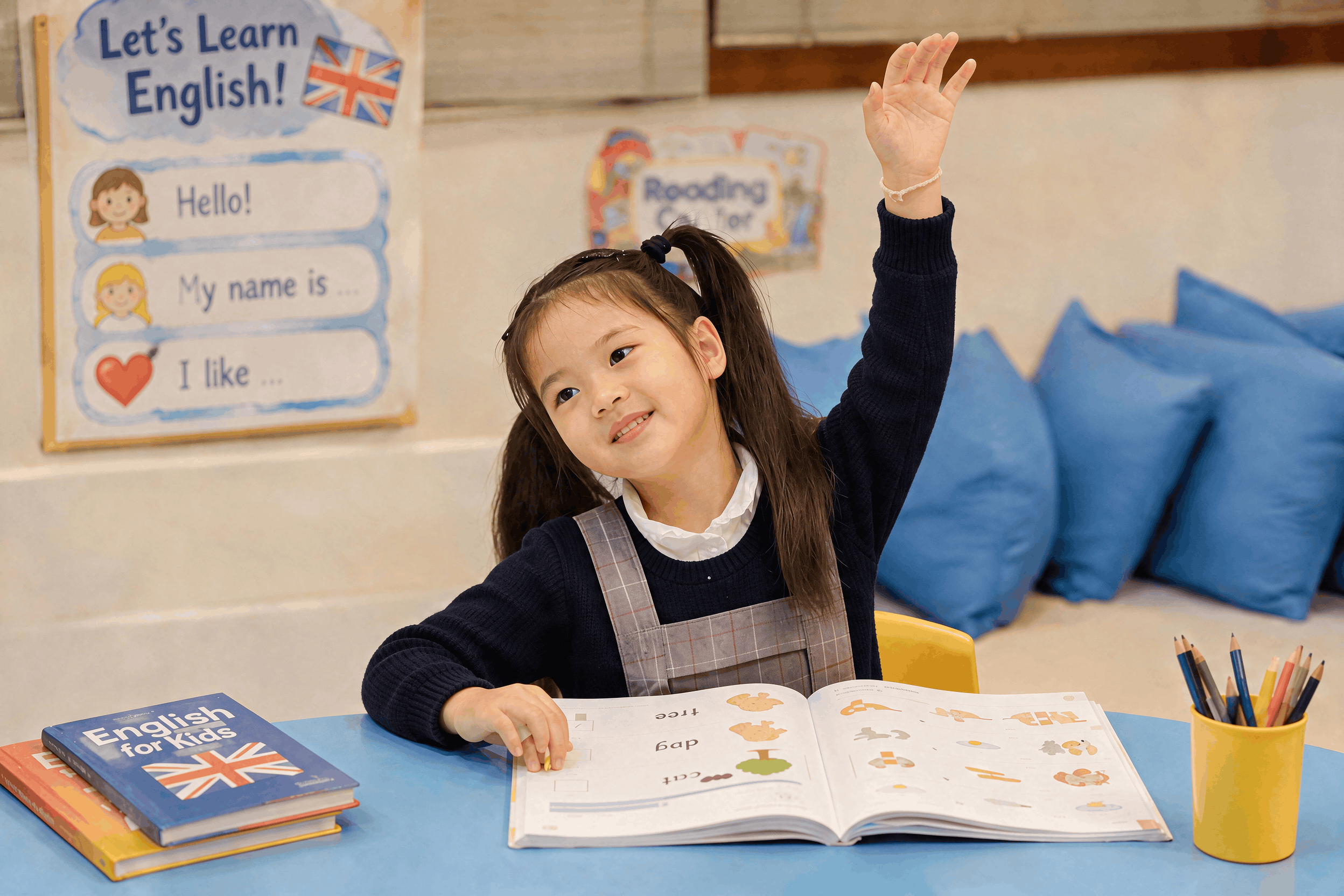
As parents, we want to give our children every possible advantage for their future. We want them to grow up confident, curious, adaptable, and prepared to take advantage of opportunities wherever life takes them. In an increasingly connected world, one of the greatest gifts we can give our children is the ability to communicate confidently in more than one language.
For families living in Spain, English proficiency can open doors to international universities, global career opportunities, travel, friendships, and experiences that might otherwise feel out of reach.
But here’s a question many parents ask: When is the best age for a child to start learning English?
The answer might be earlier than you think.
Research in linguistics, neuroscience, and child development consistently highlights the advantages of introducing a second language during childhood. While children and adults can learn new languages at any age, the early years offer a particularly valuable opportunity for developing natural pronunciation, language comprehension, and long-term fluency.
At LIFE International School, we believe that the earlier children begin their English immersion journey, the better. That’s why we welcome students as young as three years old into our Pre-K 3 program.
Let’s explore what the research says and why starting early can make such a difference.
1. The Science Behind Learning a Second Language Young
Have you ever wondered why young children seem to pick up languages so effortlessly?
A child who moves to another country at age three might develop an almost indistinguishable accent from children who grew up speaking the local language. Meanwhile, an adult who moves to the same country might study for years and still struggle with pronunciation or grammar.
There is a scientific explanation for this difference.
During childhood, the brain is particularly adaptable. This quality, known as neuroplasticity, allows the brain to form and strengthen connections in response to new experiences and information. Language exposure during these developmental years helps children recognize sounds, understand patterns, and develop the foundations of communication.
Researchers often describe this phenomenon using the concept of a sensitive period for language acquisition.
Rather than a single moment when the opportunity to learn a language disappears, different language abilities develop along different timelines. The brain gradually becomes less receptive to certain aspects of language learning as we grow older.
When do the doors start to close?
Linguist and researcher Michael H. Long, in his work on maturational constraints in language development, examined how age influences the acquisition of different language abilities. His research review suggests that these changes are gradual and cumulative, with some aspects of language learning showing age-related differences as early as age six.
Other researchers have identified important developmental windows for particular language skills:
- Birth to age 3: An especially important period for developing speech perception and recognizing the sounds and rhythms of languages. Early exposure gives children an opportunity to become familiar with sounds that may not exist in their first language.
- Ages 3–6: Children continue developing their ability to recognize language patterns, build vocabulary, and acquire pronunciation through meaningful interaction and exposure.
- Around age 7–8: Research on language development and second-language acquisition suggests that certain aspects of language learning become more sensitive to age, although the timing varies depending on the skill being studied.
- Adolescence and adulthood: Learning a new language remains entirely possible, but achieving native-like pronunciation and grammatical intuition can become more challenging.
Importantly, a landmark 2018 study by researchers Joshua Hartshorne, Joshua Tenenbaum, and Steven Pinker examined data from 669,498 English speakers. Their findings suggested that the ability to learn English grammar remains relatively strong through childhood and declines significantly around late adolescence, with their model estimating a critical-period offset at approximately 17.4 years.
This does not mean that children cannot become fluent if they start later. It means that the earlier they begin, the more time they have to benefit from the brain’s natural capacity for language acquisition.
For parents, the message is simple: Don’t wait until your child is older to introduce them to English. Give them the opportunity while their brains are especially receptive to language.
2. Why Starting English Immersion Before Primary School Matters
There is a significant difference between studying English as a subject and learning through an English immersion environment.
Traditional language lessons might introduce children to vocabulary, grammar rules, and basic conversational phrases for a few hours each week.
An English immersion program takes a completely different approach.
Instead of simply learning English, children use English to learn about the world around them.
They hear it during classroom activities, playtime, stories, songs, creative projects, conversations, and everyday interactions with their teachers and classmates.
Over time, English becomes more than a school subject. It becomes a natural tool for communication.
This is particularly powerful during early childhood because young children are naturally curious and learn through exploration, repetition, play, and meaningful social interactions.
At LIFE International School, our youngest students are immersed in English throughout their school day. They don’t need to memorize endless vocabulary lists or understand complicated grammar explanations. They acquire language naturally as they participate in the activities and experiences that make up their daily lives.
A child might learn the word “butterfly” while painting one, understand the concept of “underneath” while playing a game, or develop conversational skills while sharing a story with a friend.
This is language learning in context, and it is one of the most meaningful ways to develop communication skills.
3. Why We Recommend Starting by 2nd Grade at the Latest
What if your child hasn’t been exposed to English before starting school?
Is it too late?
Absolutely not!
Children can make tremendous progress when they begin an English immersion program in elementary school. However, starting earlier gives them a valuable head start.
At LIFE International School, our recommendation for families whose children have had little or no previous exposure to English is to begin by 2nd grade at the very latest.
Why?
Because learning a language requires more than becoming conversational. Children also need to develop the academic English necessary to understand instructions, read books, write essays, participate in discussions, and eventually study complex subjects in English.
Imagine entering a school where mathematics, science, history, and other subjects are all taught in a language you have never spoken before. Not only do you have to learn the subject matter, but you must simultaneously develop the language skills needed to understand it.
Starting early allows children more time to develop these two skill sets together.
By entering an immersion environment during preschool or the early elementary years, students have more opportunities to build vocabulary, develop listening comprehension, gain confidence speaking, and gradually acquire academic language.
Of course, every child is different. Previous exposure, individual development, motivation, and the quality of language support all matter. Starting after 2nd grade does not mean a child cannot succeed. It simply means that additional support and a carefully considered transition may be necessary.
Our goal is to help families make this important decision before their children miss valuable years of immersion.
4. Start Your Child’s Bilingual Journey at LIFE: Pre-K 3, Pre-K 4, and Kindergarten
At LIFE International School, we believe the ideal time to begin an English immersion journey is during preschool.
That’s why our program begins with Pre-K 3, welcoming children from approximately three years of age into an environment where English is the language of learning, exploration, and everyday communication.
Our early childhood program is designed around the way young children learn best: through play, discovery, relationships, creativity, and hands-on experiences.
During Pre-K 3, Pre-K 4, and Kindergarten, all classroom subjects and learning activities take place in English. Students do not have Spanish-language academic subjects during these years.
This gives children extensive, consistent exposure to English during a particularly important stage of language development.
As they progress through preschool and kindergarten, they gradually become more comfortable understanding instructions, expressing their needs, participating in conversations, and communicating with their teachers and friends.
And because they are learning through everyday experiences rather than simply studying English vocabulary, their language development becomes part of their natural educational journey.
What happens when children reach 1st grade?
One of the distinctive features of LIFE’s educational approach is that we don’t want students to become proficient in English at the expense of their Spanish language and cultural identity.
Starting in 1st grade, students begin dedicated Spanish Language and Culture instruction.
These classes introduce students to Spanish language and literature, as well as the rich history, geography, traditions, and culture of Spain.
This creates an intentional balance: students develop strong English skills through full immersion while continuing to build their Spanish language abilities and deepen their understanding of the country they call home.
Our objective is not simply to teach children a second language. It is to help them become genuinely bilingual, academically prepared, and culturally aware.
5. Will Learning Two Languages Confuse My Child?
This is one of the most common concerns parents have when considering bilingual education.
Some parents worry that introducing English at an early age might interfere with their child’s Spanish development, cause language confusion, or delay their ability to communicate.
Fortunately, research offers reassuring answers.
The American Speech-Language-Hearing Association (ASHA) explains that children can successfully learn multiple languages and that exposure to more than one language does not confuse children or cause language disorders.
It is also normal for bilingual children to occasionally mix words or grammatical structures from their languages. This is a natural part of multilingual development, not a sign that they are confused.
The National Academies of Sciences, Engineering, and Medicine similarly reports that children exposed to two languages from birth or during their first three years generally follow many of the same developmental patterns as children learning one language.
There is, however, an important consideration: children need meaningful and consistent opportunities to develop both languages.
This is why we encourage families to continue speaking, reading, singing, and communicating in their home language. If Spanish is your family’s language, keep using it! A strong foundation in a child’s first language can support additional language learning.
At LIFE, we want children to embrace both languages, not choose between them.
6. Bilingualism: An Investment in Your Child’s Future
English is one of the most widely used languages in international business, science, technology, education, and diplomacy.
As the world becomes increasingly interconnected, the ability to communicate confidently in English can give young people access to opportunities that extend far beyond their home country.
Consider some of the advantages of growing up bilingual:
International education: Strong English skills can help students pursue university opportunities in the United States, the United Kingdom, and other English-speaking countries, as well as international programs taught in English.
Global career opportunities: Many international companies operate across borders and value employees who can communicate effectively with colleagues, clients, and partners from different countries.
Cultural awareness: Speaking two languages gives children opportunities to connect with people from different backgrounds and understand different perspectives.
Communication and confidence: Being comfortable in more than one language allows children to participate in a wider range of social, academic, and professional environments.
A lifelong advantage: Language learning is not just about the opportunities available today. It gives children a foundation for continued learning, adaptability, and communication throughout their lives.
Our world is becoming more connected every year. Giving children the ability to communicate across languages and cultures is one way to prepare them for the opportunities and challenges of tomorrow.
7. Give Your Child the Gift of an Early Start at LIFE International School
Choosing the right school is one of the most important decisions a family makes.
If you are living in Madrid and want your child to grow up speaking both English and Spanish confidently, an early English immersion education is an excellent place to start.
At LIFE International School, located in Tres Cantos, we offer an English immersion educational experience beginning with Pre-K 3 and continuing through senior year of high school.
Our approach combines:
- Full English immersion, with qualified English-speaking educators.
- A nurturing early childhood environment where children learn through play and exploration.
- Dedicated Spanish Language and Culture instruction beginning in 1st grade.
- An internationally oriented academic program.
- A Christian foundation built around Love, Integrity, Faith, and Excellence.
- A supportive, multicultural community where every child is encouraged to grow academically, socially, and spiritually.
We believe that children should have the opportunity to develop their language abilities while they are young, discover their unique gifts, and build a foundation for a lifetime of learning.
The best time to start your child’s English immersion journey is not tomorrow. It’s now.
If your child is approaching preschool age, or if you are considering an English immersion school in Madrid, we would love to introduce you to LIFE.
Come visit our campus in Tres Cantos, meet our teachers, and discover what an early start in English immersion can mean for your child’s future.
Give your child the opportunity to grow up bilingual. Start their journey at LIFE International School.


